
Getting the water out is the part everyone focuses on. The parts that actually decide whether a refinished floor lasts, and whether you are allowed to do the work, come afterwards.
Dry to the touch is not dry
Concrete holds water long after the surface looks and feels fine. A slab that took standing water can keep releasing vapor for weeks, and anything film-forming laid over it will blister from underneath. The only honest way to know is to test, either with a taped plastic sheet left down overnight or a calcium chloride kit. Both are cheap. Neither is optional after a flood.
The paperwork nobody mentions
If the property sits in a floodplain, repair work can count toward Harris County's substantial improvement threshold, and a floor refinish counts toward the project total alongside everything else you are fixing. Cross that line and the rules for the whole structure change. This is worth a call to the Harris County Engineer before you commit to a scope, not after. We cannot make that determination for you and neither can any contractor.
The map is not the test
The single most useful number from Harvey: of the 154,170 Harris County homes that flooded, 68 percent were outside the 1 percent floodplain (HCFCD's final report). Being off the map is not evidence your slab will stay dry, and it is not evidence the paperwork does not apply either. Check the current designation rather than assuming from experience.
What flooding actually does to concrete
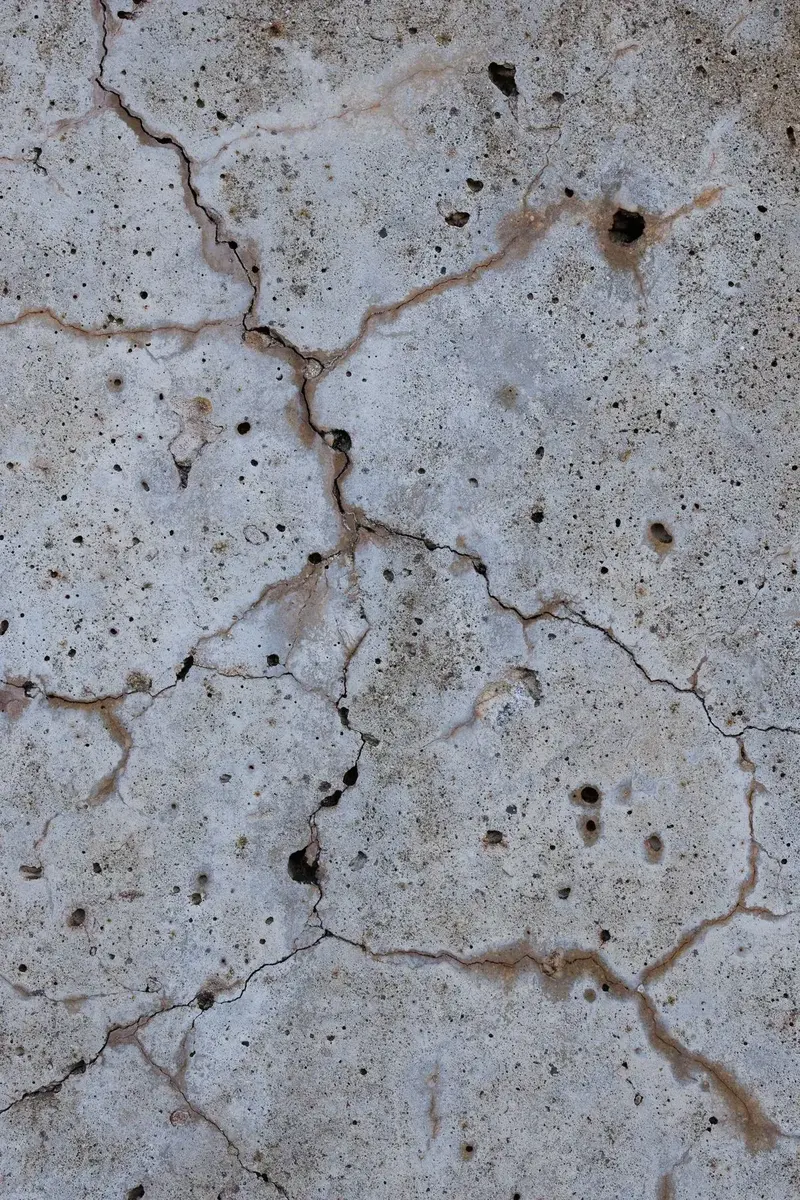
Usually less than people fear. The slab itself is rarely the casualty. What changes is what is under and around it: saturated clay swelling, fill washing out from under an edge, and any existing crack now carrying water through it. Those show up as new movement at the joints over the following months, which is why an immediate refinish can be the wrong order of operations.
Why waiting is often the right call
The ground under Atascocita is high shrink-swell clay in places, with Vamont and Atasco running 12.8 and 10.0 percent maximum linear extensibility. After a soaking, that ground moves as it dries back out. Refinishing before the slab has settled means paying twice. One dry cycle of patience is usually cheaper than the second job.
Where to start
In order: get it dry, get it tested, check the floodplain position with the County Engineer, then look at the slab itself. If the concrete has come through sound, a refinish is straightforward. If joints have opened or a corner has dropped, that is a repair conversation first, which is what our concrete resurfacing and repair page covers.